
How to Cut Foam Board? Step-By-Step Guide
Posted by Bruce on May 30th 2026
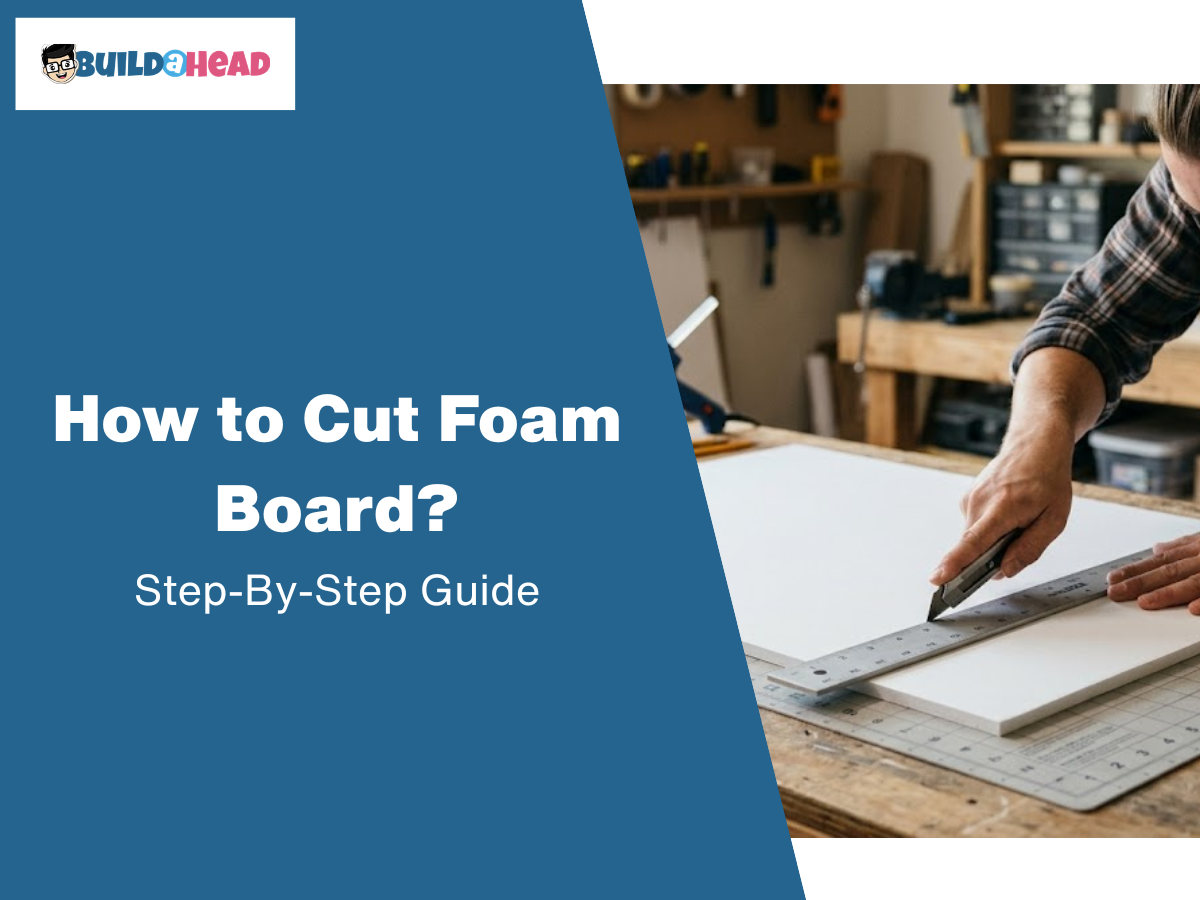
To cut foam board cleanly and accurately, place it on a self-healing cutting mat, mark your cutting line with a pencil and metal straightedge, then use a sharp utility knife or X-ACTO knife with multiple light scoring passes rather than forcing a single deep cut. Having the right tools makes all the difference, so keep a sharp craft knife, fresh replacement blades, a metal ruler or T-square, a self-healing cutting mat, and a hot-wire cutter for thick foam or curved cutouts within reach before you begin.
The best cutting method depends on your foam type, board thickness, and the cut style your project requires. Thin paper-faced foam boards respond well to utility knives and straightedges, while thick, rigid foam boards need serrated knives, insulation saws, or hot-wire cutters for smoother, more controlled results. For more advanced projects, techniques like scoring and snapping, bevel cuts, V-cuts, laser cutting, die cutting, and edge cleanup take your precision further and deliver cleaner, professional-quality finishes.
Follow the 7 steps below to cut a foam board:
- Step 1: Measure and mark the cut line
- Step 2: Place the board on a cutting mat
- Step 3: Hold a metal ruler on the line
- Step 4: Make the light pass
- Step 5: Repeat the cut 2–4 times
- Step 6: Keep the blade straight
- Step 7: Replace dull blades quickly
What Tools Are Required To Cut Foam Board?
Tools required to cut foam board include a sharp craft knife, a metal ruler, a self-healing cutting mat, and a hot-wire foam cutter. Each tool supports the cutting process by improving accuracy, stability, and edge quality when cutting foam board.
6 essential tools required to cut foam boards are:
- Sharp Craft Knife (X-ACTO or Utility Knife): Cleanly intricate cuts or straight long edges on foam board with controlled pressure and straight cutting lines.
- New blade: Prevents jagged edges, tearing, and crushed foam during cutting.
- Metal ruler or T-square: Guides the blade for straight, accurate cuts in foam board.
- Self-healing cutting mat: Protects the surface and keeps the foam board stable while cutting.
- Hot wire foam cutter: Cuts thick foam, styrofoam, and curved foam board shapes smoothly.
- Pencil: To mark accurate cutting lines and measurement points on the foam board surface.
How to Cut Foam Board Cleanly? Step-by-Step Guide
To cut foam board cleanly, measure and mark the cutline, place the board on a cutting mat, hold the metal ruler, make a light pass, repeat the cutting process, keep the blade straight, and replace dull blades quickly. Following this foam board cutting process helps create straight edges, reduces tearing, and improves cutting precision for DIY projects, signage, displays, and foam board cutouts.
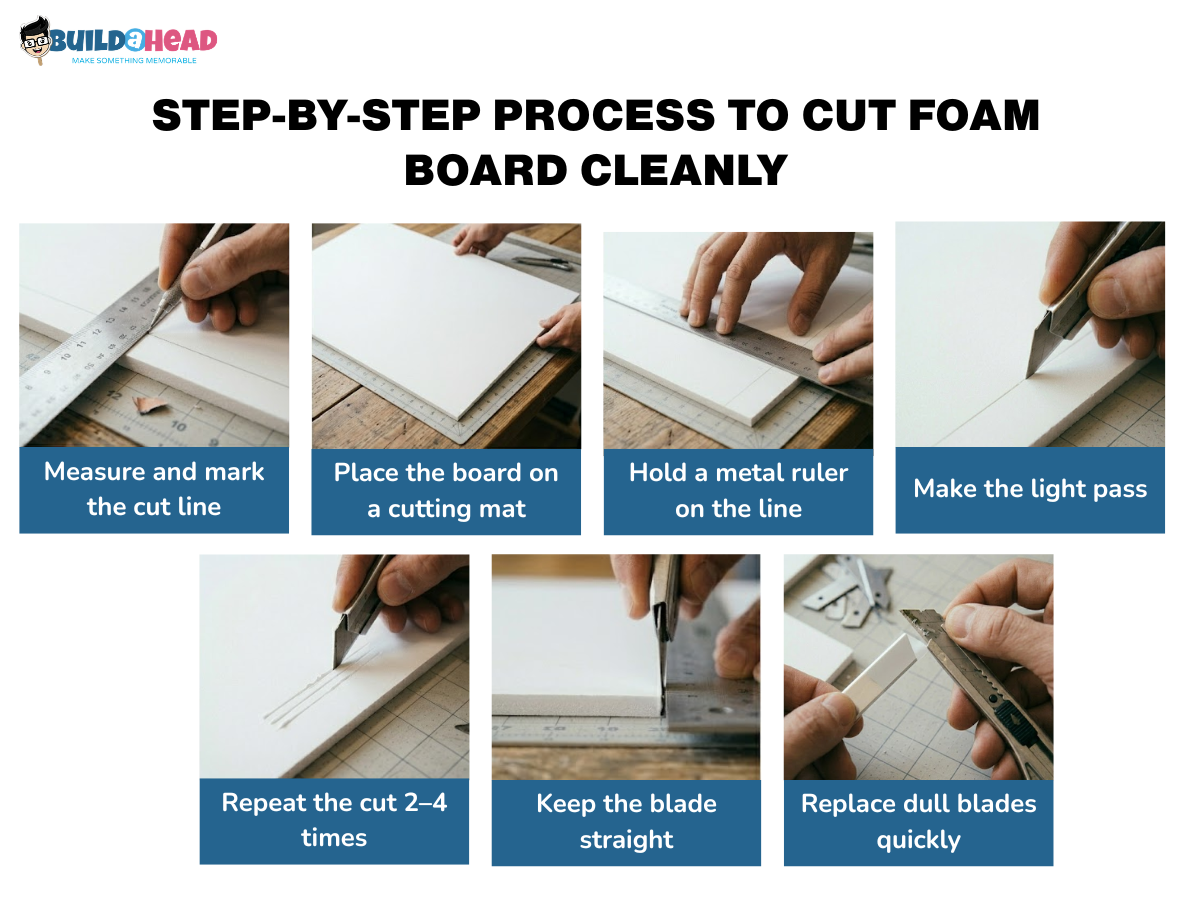
The step-by-step process to cut foam board cleanly is:
-
Step 1: Measure and mark the cut line
Place the foam board flat on a stable surface to prevent shifting. Use a tape measure to pull your dimensions and lightly mark your desired length or width at three distinct points (top, middle, and bottom of the board).
Align a rigid metal straightedge across all three marks to guarantee the line stays perfectly square. Draw a single, continuous guideline using a sharp pencil or a fine-tip permanent marker, applying a very light touch to avoid denting or compressing the foam surface.
-
Step 2: Place the board on a cutting mat
Transfer your marked foam board onto a professional self-healing cutting mat to protect your workbench and ensure the blade cuts cleanly. Align your pencil guideline with the mat's built-in grid lines for an extra visual check of squareness.
Position your metal ruler or a heavy, cork-backed straightedge precisely along your marked line, and plant your non-dominant hand firmly on top, spreading your fingers to apply even downward pressure across its length so the board cannot drift.
-
Step 3: Hold a metal ruler on the line
Maintain a rock-solid grip on your straightedge with your non-dominant hand to prevent dangerous slips. Grip your utility knife or X-Acto knife with your dominant hand and position the blade so that it rests flush against the vertical sidewall of the metal straightedge.
Hold the knife at a 90-degree angle to the board surface so the blade drops perpendicular, ensuring the internal foam core is cut straight up and down and preventing sloped bevels.
-
Step 4: Make the light pass
Do not try to slash completely through the material on your first try, as forcing a deep cut will immediately crush the internal foam. Using a brand-new blade, such as a utility knife or X-ACTO knife, apply incredibly gentle downward pressure and draw the knife smoothly down the edge of your metal ruler (less than 45 degrees relative to the board).
Focus this first pass entirely on cleanly slicing through the top layer of the paper or plastic facing and lightly scoring the top of the internal foam to establish a flawless track for subsequent cuts.
-
Step 5: Repeat the cut 2–4 times
Slice through the foam board gradually by tracing your blade directly along your initial scoring track 2 to 4 more times, applying moderate, controlled pressure. Use the second pass to cut deeply through the delicate internal foam core without compressing it, and the third or fourth pass to cleanly slice through the bottom facing layer until you slightly nick the underlying mat.
Keep the fingers holding your straightedge tucked well behind the path of the oncoming razor blade at all times.
-
Step 6: Keep the blade straight
Keep your utility knife locked tight against the heavy metal straightedge on every single stroke to ensure your blade alignment remains completely uniform. Hold the blade perfectly vertical throughout the entire duration of the cut.
Never allow the knife to tilt or lean sideways between your first and final passes, which will carve out tiny chunks of internal foam and result in a fuzzy, ragged edge.
-
Step 7: Replace dull blades quickly
Actively monitor your blade's condition and replace it immediately if you notice the knife dragging, requiring excessive force, or leaving ragged facings. For snap-off knives, use pliers or the built-in slot to safely break off the dull segment at its scored line.
In contrast, for craft knives, unthread the collet to replace the spent blade with a fresh one. When executing all cuts, maintain a low trailing blade angle of 30 to 45 degrees relative to the board surface so the razor slices cleanly, like a sword, rather than plowing through the material.
How Do You Cut Different Types and Thicknesses of Foam Board?
To cut different types and thicknesses of foam board, match the cutting tool and technique to the foam board's material, density, and thickness for cleaner, more accurate results. Thin paper-faced foam core boards between 5 mm and 10 mm cut best with a sharp X-ACTO knife or utility knife and a metal straightedge, while thick rigid foam boards between 25 mm and 50 mm or 1 to 2 inches require tools like a long serrated knife, an electric carving knife, or a hot wire cutter.
Here are ways you can use to cut different types and thicknesses of foam board:
1. Standard Foam Board
To cut standard foam board cleanly, place the board on a self-healing cutting mat and align a rigid metal straightedge firmly along the marked cutting line. Hold a fresh utility knife or X-ACTO knife at a shallow trailing angle, then guide the blade with multiple light passes to slice through the paper facings without tearing the inner foam core. For precise straight cuts, use tools such as the Logan FoamWerks Straight Cutter; for intricate shapes, use a scroll saw. Also, avoid using hot wire cutters because heat can damage the paper surface.
2. Foam Core Board
When cutting foam core board, use a brand-new utility knife or X-ACTO knife, anchored firmly against a heavy metal ruler, to achieve clean, professional results. Guide the blade with disciplined, light scoring passes so the knife gradually slices through the top paper layer, foam core, and bottom backing without crushing the material. Avoid forcing the blade through in one motion, as excessive downward pressure can collapse the inner foam and tear the paper facing. For perfectly square and perpendicular borders, use tools such as the Logan FoamWerks Straight Cutter to maintain a true 90-degree cutting angle.
3. Black Foam Board
For clean black foam board cuts, place the board on a self-healing cutting mat and align a heavy metal straightedge firmly along the marked cutting line to ensure smooth, seamless edges. Hold a sharp utility knife or X-ACTO knife at a steady angle, then guide the blade with multiple light scoring passes instead of one deep cut to prevent tearing the dense black paper liners or crushing the foam core. Replace dull blades quickly to preserve the board’s professional appearance for displays, architectural mockups, photography backdrops, and presentation projects.
4. Thick Foam Board
For thick foam board cutting, mark the cutting line clearly, then guide a drywall saw, hand saw, or circular saw with a fine-toothed blade slowly through the foam using controlled, steady strokes. Keep the blade perpendicular to the foam surface throughout the cut to maintain straight and smooth edges. Thick foam boards used in construction and large-scale architectural projects are 1-2 inches or more thick, making standard utility knives and hot-wire cutters less effective. For straighter results, clamp a sturdy piece of timber along the cutting line and guide the saw against it.
5. Insulation Foam Board
To cut insulation foam board cleanly, use a sharp utility knife for thin panels and a long serrated blade or a specialized hot knife for thicker panels. Mark the cutting line with a secured straightedge, then score the thin insulation sheets deeply with the utility knife before snapping the board cleanly along the line to achieve straight, smooth edges. For thick insulation panels, hold the blade at a shallow angle and guide it with a steady sawing motion, using several light passes instead of forcing a single deep cut, to prevent tearing, crushing, or rough foam edges.
6. PVC Foam Board
When cutting PVC foam board, match the cutting method to the panel's thickness for cleaner, more accurate results. For PVC foam boards up to 5 mm thick, place the board on a stable surface, mark the cutting line clearly, then guide a sharp utility knife along a securely clamped metal ruler. Once scored, snap the board carefully along the line for a clean break. For PVC foam boards thicker than 5 mm, use a table saw, circular saw, jigsaw, or band saw fitted with a fine-toothed blade to reduce chipping and maintain smooth edges. After cutting, smooth rough edges with medium-grit sandpaper or a metal file for a cleaner finish.
7. Self-Adhesive Foam Board
For self-adhesive foam board cut, place the board on a self-healing cutting mat and secure a sturdy metal straightedge firmly along the marked cutting line. Use a brand-new utility knife, X-ACTO knife, or foam board cutter to make several light scoring passes rather than forcing a single deep cut through the foam and adhesive backing. Gradually increase pressure with each pass until the blade cuts cleanly through the board without tearing or compressing the foam. To maintain smooth cutting performance, wipe the blade with rubbing alcohol or Goo Gone between passes to remove adhesive buildup.
8. Rigid Foam Insulation Board
To create tight and flush joints on rigid foam insulation boards, keep the blade perfectly perpendicular to the foam surface throughout the cut. For thin panels, place a utility knife firmly against a metal straightedge and score with several light passes. For thick, high-density boards, guide an electric carving knife or serrated knife slowly along the cutting track, keeping the blade upright and applying controlled pressure.
9. 2-inch Foam Board
To cut deep 2-inch foam board accurately, select a long serrated knife or a specialized hot-wire bow cutter that can cleanly clear the full depth of the foam. Mark the cutting layout on both sides of the board for better alignment, keep the tool handle flat and level during the cut, and guide the blade with repeated controlled passes to prevent crooked internal edges or blade deflection.
10. Poster Board
For crisp, straight poster board cuts, place the board flat on a high-quality self-healing cutting mat, and hold a metal straightedge firmly in place with your non-dominant hand to prevent shifting. Draw a fresh X-ACTO blade along the ruler using a low 30-degree trailing angle, then complete the cut with one or two light scoring passes to separate the dense fiber layers smoothly and accurately.
What Special Techniques Can You Use to Cut Foam Board?
Special techniques you can use to cut foam board include scoring and snapping, beveling, V-cuts for hinges, laser cutting, die cutting, cutting intricate curves, and edge cleanup. Choosing the correct technique helps create cleaner edges, smoother folds, more accurate shapes, and more professional foam board cutout finishes, depending on the project requirements.
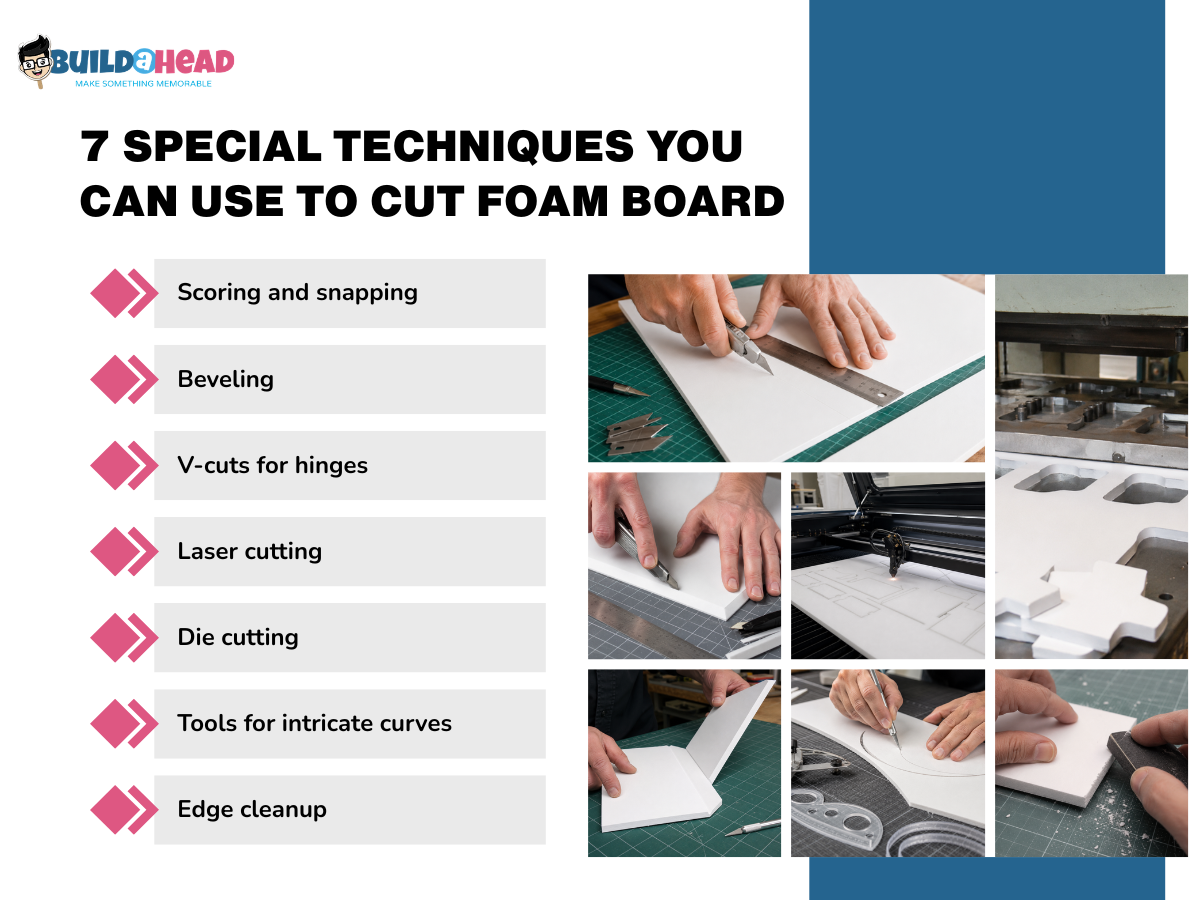
7 special techniques you can use to cut foam board are:
- Scoring and snapping: Score through the top paper layer with a sharp utility knife, bend the board along the score line until the foam snaps, then cut through the remaining backing paper to achieve straight, clean edges.
- Beveling: Hold the blade at a 45-degree angle against a metal straightedge to create angled edges for mitered corners and seamless board joints.
- V-cuts for hinges: Cut two parallel lines halfway through the foam board, then remove the inner foam strip, leaving the outer paper intact so the board folds cleanly along the groove.
- Laser cutting: Use a laser cutter for intricate designs, repeated patterns, and precise foam board cutouts with smooth and accurate edges.
- Die cutting: Use a die cutting machine with a shaped metal die to create multiple identical foam board shapes, such as letters, circles, or custom display cutouts.
- Tools for intricate curves: Use a scroll saw with a fine blade or a hot-wire cutter to create smooth, curved edges and rounded foam board shapes.
- Edge cleanup: Smooth rough edges with a sanding block, or carefully shave uneven areas with a craft knife for a cleaner finish.
What Factors Affect How Well You Can Cut Foam Board?
Factors affecting how well you can cut foam board involve blade sharpness, angle of the blade, cutting pressure, technique, tool types, and foam board density. Paying attention to these elements helps achieve smooth edges and precise shapes for any project.
Below are the 5 major factors affecting how well you can cut foam board:
- Blade sharpness: The sharpness of a blade, such as a knife, affects the quality of foam board cutouts by determining how smoothly it slices through the paper facing and foam core. A sharp blade creates clean, precise edges, while a dull blade can tear the foam, snag on the surface, and leave rough or fuzzy cutouts.
- Blade angle: By altering the physical friction exerted on the substrate, blade angle directly impacts foam board cutouts. Maintaining a low, swept trailing angle (around 30 degrees relative to the board) maximizes the blade's slicing edge for a smooth, fluid glide. If you hold the knife too upright or at an angle greater than 45 degrees, the tip acts like a plow, digging vertically into the material.
- Cutting pressure and technique: The pressure applied during cutting can directly affect the final edge of the foam board by controlling how smoothly the blade moves through the foam core and paper surface. Light pressure with multiple shallow passes creates cleaner and straighter cuts, while excessive force can crush the foam and damage the edges.
- Tool type: Tool selection dictates how efficiently your hardware overcomes the board's specific structural mechanics by matching the cutting method to the foam board's thickness, density, and surface material. Utility knives work best for thin foam boards, while hot wire cutters and serrated knives produce smoother cuts on thick or dense foam.
- Foam density: Foam density affects foam board cuts by controlling the amount of structural resistance and blade deflection encountered during cutting. Lightweight foam boards cut easily with standard craft knives, while high-density rigid foam and thick polystyrene require stronger cutting tools, such as serrated knives or hot-wire cutters, to maintain smooth, accurate cutouts.
Can You Cut Foam Board with a Cricut or Other Machines?
Yes, you can cut foam board with a Cricut or other cutting machines, but the cutting capability depends on the foam board thickness and machine type. Cricut Maker machines equipped with a Knife Blade can cut thin foam board, craft foam, and foam sheets thinner than 2.4 mm when secured to a Purple StrongGrip mat with masking tape.
For thick foam board (5mm or 10mm), rigid foam insulation, or dense polystyrene, use specialized machines such as laser cutters, CNC routers, foam-cutting machines, or hot-wire cutters. Laser cutters create highly precise foam board cutouts and intricate designs, while hot wire cutters melt through thick foam smoothly with minimal debris. Choosing the correct machine based on foam density and board thickness helps maintain accurate cuts and clean edges.
Should You Use a Hot Wire Cutter or Other Specialty Tools?
If you frequently work with foam such as XPS, EPS, or styrofoam, a hot wire cutter is highly recommended, whereas other specialty tools, such as scroll saws, are better suited for straight production cuts, repeated custom shapes, and sharp corners. Choosing the correct specialty tool based on the foam type, board thickness, and cut complexity helps improve cutting precision, edge smoothness, and overall project quality. For intricate curves and dense foam materials, specialty cutting tools also reduce tearing, crushing, and uneven edges on foam board.
How Can You Cut Foam Board Without Making a Mess?
To cut foam board without making a mess, place the foam board on a self-healing cutting mat, hold it firmly, score the cutting line, cut along the line with a utility knife, move the knife gradually, use a hot-wire cutter, and remove any loose foam particles. Following these steps accordingly ensures you cut foam board without making a mess.
Here are the steps you can follow to cut foam board without making a mess:
- Step 1: Place the foam board on a self-healing cutting mat or scrap cardboard
- Step 2: Hold the foam board and metal straightedge firmly in place or use clamps to prevent shifting while cutting.
- Step 3: Cut with a fresh utility knife or X-ACTO blade to reduce tearing, dragging, and loose foam particles.
- Step 4: Score the cutting line gradually with several light passes, rather than forcing the blade through the foam in one motion.
- Step 5: Move the knife with controlled and steady pressure to maintain straight edges and minimize scattered foam fragments.
- Step 6: Use a hot-wire cutter for styrofoam or dense foam boards when cleaner, dust-free cuts are required.
- Step 7: Remove loose foam particles with a soft brush or lightly smooth rough edges using a sanding block for a cleaner finish.
How Do You Get Clean Edges When Cutting Foam Board?
You can get clean edges when cutting foam board by using a sharp blade, maintaining a low cutting angle, securing a metal straightedge firmly along the cutting line, and making multiple light scoring passes rather than forcing a single deep cut. Using controlled pressure and replacing dull blades quickly helps prevent torn paper facings, crushed foam cores, and jagged foam board edges. For smoother finishes, lightly sand rough edges or trim loose foam particles with a craft knife after cutting.
How Should You Choose a Foam Board Cutting Tool?
To choose a foam board cutting tool, consider your project requirements, foam board thickness, foam density, cut complexity, and the desired edge finish. Selecting the correct cutting tool helps improve cutting precision, edge smoothness, and overall control while reducing torn foam, jagged edges, and cutting resistance.
Factors to consider before choosing a foam board cutting tool are:
- For thin foam boards: Use a sharp utility knife or X-ACTO knife for paper-faced foam boards, poster boards, and standard craft projects requiring straight, accurate cuts.
- For thick foam boards: Use long serrated knives, insulation saws, or electric carving knives for thick foam boards and dense insulation foam because these tools cut through deep foam more smoothly.
- For smooth and dust-free cuts: Choose a hot wire cutter for styrofoam, rigid foam insulation, and curved foam board cutouts because the heated wire melts through the foam with minimal debris.
- For curves and intricate shapes: Use a scroll saw or foam cutting saw for rounded edges, detailed foam board cutouts, and irregular cutting patterns that require better maneuverability.
- For highly precise cuts: Choose laser cutters for custom signage, prototypes, intricate designs, and repeated precision foam board patterns.
- For repeated custom shapes: Use die-cutting machines when producing multiple identical foam board cutouts, such as letters, logos, circles, and display components.
- For dense or high-thickness foam: Use stronger cutting tools for dense foam, as lightweight foam boards cut easily with craft knives, whereas rigid, high-density foam requires more powerful tools for cleaner edges.
When Is Cutting Foam Board Yourself Not Worth the Effort?
Cutting foam board yourself can work well for simple shapes and small projects. However, achieving straight lines, clean silhouettes, and precise curves requires the right tools, a sharp blade, and a steady hand. For display pieces, event standees, or any project where presentation matters, uneven edges and compressed foam surfaces can be difficult to conceal. When the goal is a polished, professional-looking result, it is often more practical to choose a custom Life-size foam board cutout. With clean, precision-cut edges, high-resolution printing, and a ready-to-display finish, you get a finished product that looks as good as it performs.