
How to Transport, Store and Protect Your Life-Size Cutout
Posted by Bruce on Sep 17th 2026
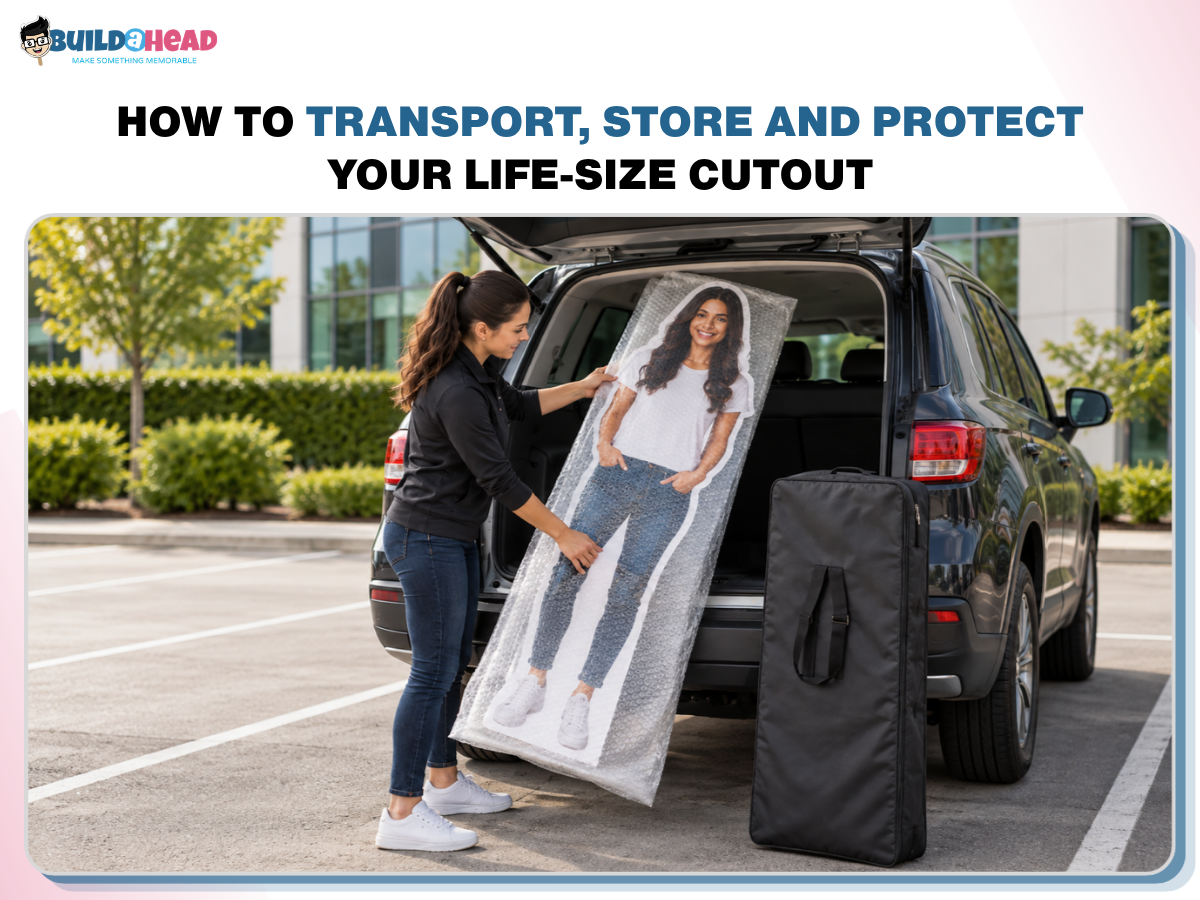
To transport a life-size cutout without damage, fold it only along existing score lines, carry multi-panel sections separately, and secure each piece inside the vehicle to prevent bending, rubbing, and impact damage. After the cutout reaches its destination, proper storage becomes the next step in preserving its condition. Store the cutout flat or fully upright with adequate support, maintain stable humidity and temperature, and avoid stacking heavy objects on top to prevent warping, crushing, and structural deformation between events.
During storage and outdoor use, protect the cutout from moisture, prolonged sunlight, and wind. Reinforce struts and easels, seal exposed edges, and laminate handled surfaces to reduce damage. Use cardboard supports for dry indoor conditions and Coroplast for damp or outdoor environments. Consistent handling, storage, and weather protection help preserve the cutout’s shape, printed surface, and support structure for repeated use.
How Do You Transport a Life-Size Standup Without Damage?
To transport a life-size standup without damage, fold it along existing score lines, carry multi-panel cutouts separately, and secure all pieces firmly inside the vehicle. These steps reduce bending, crushing, and movement that could damage the cutout during transit.
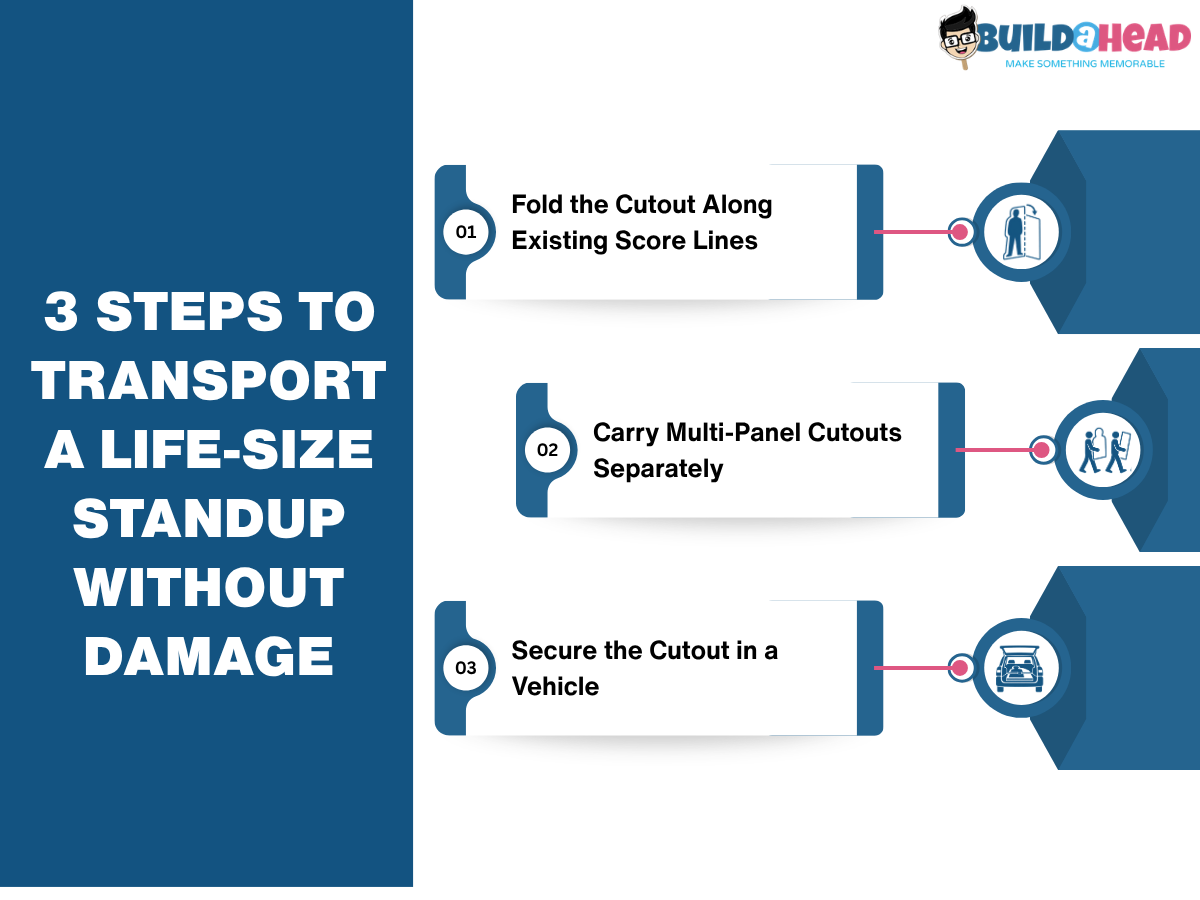
3 steps to transport a life-size standup without damage are:
- Fold the Cutout Along Existing Score Lines
Start by folding your life-size cardboard cutout gently along its existing factory score lines. These predefined folding points reduce bending pressure on the cardboard structure and help the standup collapse into a compact shape without creating random creases. Avoid forcing new folds, as they can cause tears, surface buckling, warping, or permanent structural damage. Once the cutout is properly folded, check whether it contains multiple detachable panels that require separate handling.
- Carry Multi-Panel Cutouts Separately
If your life-size cutout contains multiple panels, separate each section before placing it in the vehicle. Transporting connected sections can put pressure on joints and connectors, which may cause breakage, frayed edges, or alignment problems. Lay each panel flat and place protective wrap between the sections to prevent rubbing, scratches, and edge dents. After you protect the individual panels, position them securely in the vehicle so they cannot shift during travel.
- Secure the Cutout in a Vehicle
Place the folded cutout or separated panels flat in a clean trunk, cargo area, car floor, or clear backseat. Keep heavy cargo away from the cutout, then use straps, bungee cords, padding, or stable items to prevent movement. Securing the pieces limits sliding, sudden bending, edge impacts, and wind-related movement, helping the life-size cutout retain its shape and printed surface throughout transport.
How Do You Store a Life Size Cutout Between Events?
To store a life-size cutout between events, keep it flat or upright without leaning, control humidity and temperature, and avoid stacking heavy items on top. These storage practices help protect the cardboard structure from bending, warping, moisture damage, and crushing.
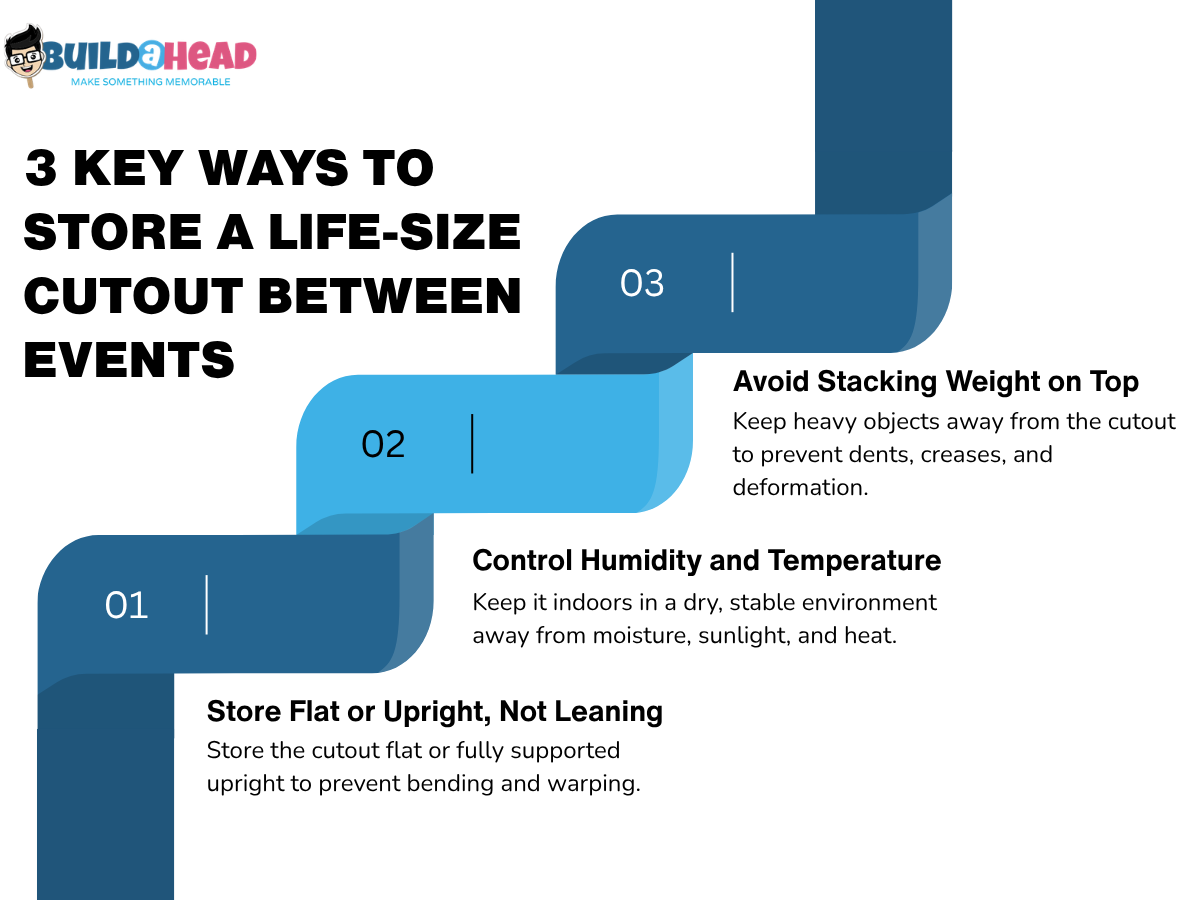
3 key ways to store a life-size cutout between events are:
- Store Flat or Upright, Not Leaning
Store the life-size cutout on a clean, flat surface, or place it fully upright with firm support behind it. Leaving the cutout leaning without full support creates uneven pressure across the cardboard, which can cause bending and warping over time. Flat or fully upright storage distributes pressure more evenly and helps preserve the cutout’s original shape. Once the cutout has proper support, protect it from moisture and temperature changes within the storage area.
- Control Humidity and Temperature
Keep the life-size cardboard cutout in a dry indoor storage environment with stable temperature conditions. Moisture exposure can weaken cardboard, while repeated temperature and humidity changes can affect its shape and printed surface. Keep the cutout away from damp areas, direct sunlight, heaters, and other sources of environmental fluctuation. After controlling the storage environment, make sure no heavy objects place pressure on the cutout.
- Avoid Stacking Weight on Top
Place boxes, equipment, foam board signs, cardboard display stands, and other heavy objects away from the stored cutout. Concentrated pressure can bend, dent, crease, and permanently deform the cardboard structure. Leaving the surface free from stacked weight protects the life-size cutout and helps maintain its shape between events. Leaving the surface free from stacked weight protects the life-size cutout and helps maintain its shape between events.
How Do You Store Cutout Struts and Easels?
To store cutout struts and easels, reinforce the back, seal exposed edges, laminate the surface for added protection, and choose between Coroplast and cardboard based on the intended outdoor use. These measures help protect the cutout structure and surface from bending, edge damage, moisture, and repeated handling.
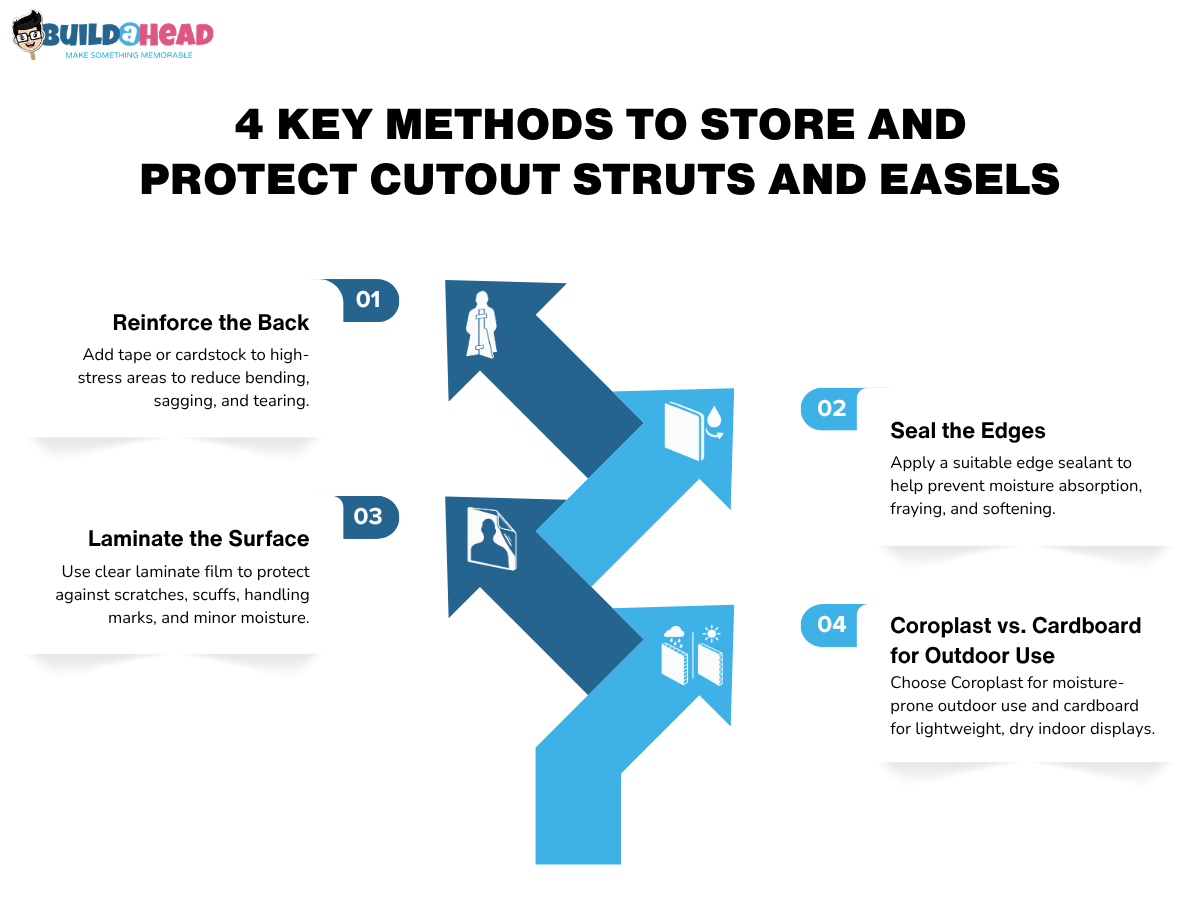
Below are the 4 key methods to store and protect cutout struts and easels:
- Reinforce the Back
Strengthen the rear support of the cutout easel by reinforcing hinge points, locking tabs, vertical struts, attachment points, and other high-stress areas. Apply heavy-duty packing tape, suitable repair tape, or an extra strip of thick cardstock where you need extra support. Targeted reinforcement helps distribute stress and reduces bending, sagging, and tearing during repeated setup and handling. Avoid covering functional folds or locking slots with too much tape, as these areas need to move and engage correctly when the easel opens.
- Seal the Edges
Put a thin layer of clear wood glue, PVA glue, or a suitable edge sealant along the exposed cardboard edges to reduce moisture absorption and physical wear. The sealed edge limits moisture contact with the porous cardboard interior and helps prevent fraying, swelling, and softening during storage and handling. This treatment helps the strut retain its rigidity and provides more reliable support for the life-size cutout between uses.
- Laminate the Surface
Apply a clear laminate film or suitable protective covering to cutout struts and easels before storage to reduce scratches, scuffs, handling marks, and minor moisture exposure. Focus on frequently handled surfaces, but leave folds, hinges, and locking tabs unrestricted so the support remains functional. Lamination also helps the cardboard retain its stiffness during storage by limiting moisture contact, but exposed edges, cuts, folds, and seams still require separate protection.
- Coroplast vs. Cardboard for Outdoor Use
Coroplast is a moisture-resistant material suitable for cutout struts and easels in outdoor or damp conditions, whereas cardboard is a lightweight material suited to dry indoor environments. For struts and easels, Coroplast provides dependable backing in moisture-prone settings, while cardboard allows easier folding, handling, and storage between events.
How Do You Protect a Cutout from Weather?
To protect a life-size cutout from weather, shield it from moisture and rain, limit prolonged sunlight exposure, and secure it against wind to maintain its surface, shape, and outdoor stability. Proper weather protection helps reduce water damage, print fading, warping, and movement during outdoor use.
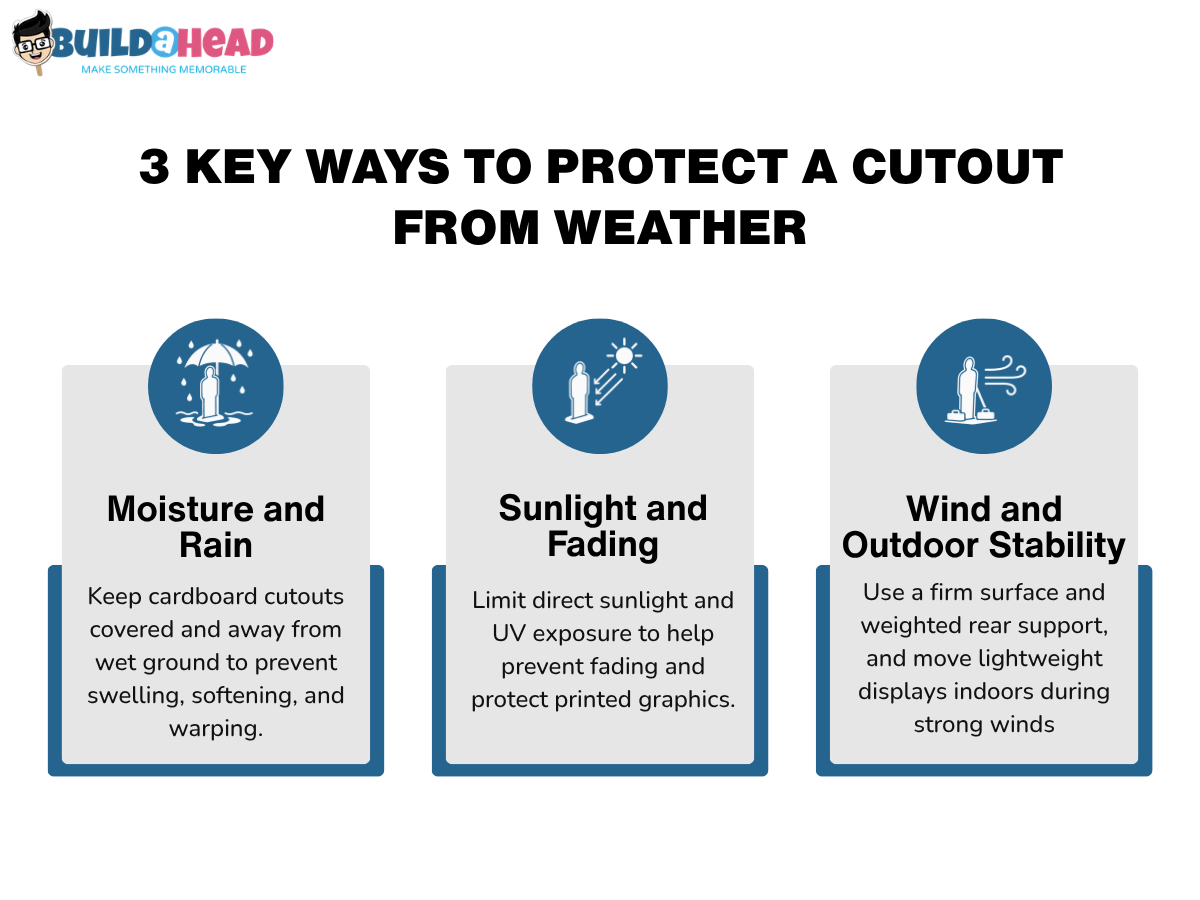
Below are the key ways to protect a cutout from weather:
- Moisture and Rain
Protect a life-size cutout from rain, humidity, dew, and ground moisture by placing it under cover. Standard cardboard absorbs water, which can cause swelling, softening, warping, and delamination. Seal raw edges with clear tape and place the bottom of the display on a plastic riser or waterproof mat to limit moisture transfer from wet ground. Protective coatings, laminates, and sealed edges can provide limited moisture resistance, but they do not make cardboard waterproof. Standard cardboard displays are primarily intended for indoor use, so move the cutout indoors during rain or prolonged damp conditions.
- Sunlight and Fading
Limit direct sunlight and UV exposure to preserve the printed graphics and colors of a life-size cardboard cutout. Extended UV exposure can fade printed surfaces and affect standard cardstock, so position the display in a shaded or covered location. For planned outdoor use, UV-resistant inks or protective laminates can provide further surface protection. Store the cutout away from direct sunlight between events to reduce continued UV exposure and preserve the photo cutout's appearance.
- Wind and Outdoor Stability
Stabilize life-size cutouts against wind, tipping, and bending by placing them on a firm, level surface and reinforcing the rear easel. Broad display surfaces can catch wind, so place sandbags or bricks behind the base support strut rather than attaching heavy weights directly to the display. For prolonged outdoor use, Coroplast provides a moisture-resistant alternative to cardboard. Bring lightweight displays indoors during strong gusts to prevent movement, support failure, or structural damage.
Tips to Make Your Custom Cutout Last Longer
To make your custom cutout last longer, handle it by the edges instead of the face, keep it away from direct heat sources, inspect it before every event, and repair minor damage early to preserve its shape, surface, and structural condition. Consistent handling and routine maintenance help prevent small signs of wear from developing into more serious damage.
The 4 key tips to make your custom cutout last longer are:
- Handle by the Edges, Not the Face: Always lift and move the cutout by its outer perimeter rather than pressing against the printed surface. Gripping the face puts uneven pressure on the hollow fluting, which can cause unsightly hand-oil stains, surface dents, or accidental creases in the cardboard.
- Keep It Away from Direct Heat Sources: Position your display well away from radiators, space heaters, stage spotlights, and hot air vents. Excessive heat dries out the cardboard fibers, making them brittle, prone to cracking along score lines, and vulnerable to warping.
- Do a Quick Inspection Before Every Event: Routinely check the rear easel, fold lines, hinge tabs, and base edges before setting up the display. Catching a loose hinge, a fraying tab, or a weak corner early prevents total structural collapse while the cutout is on display in public.
- Touch Up Minor Damage Early: Fix small tears, peeling edges, or surface scuffs immediately using clear packing tape on the back and a matching marker or touch-up paint on the front. Addressing minor wear right away stops small rips from tearing further during transport or handling.
Where Can You Order a Custom Life-Size Cutout or Big Head?
You can order a custom life-size cutout or big head from a specialized custom printing supplier or manufacturer that produces personalized cardboard displays. These providers offer customization, material selection, sizing, and design options that allow you to create a cutout from a chosen photo or artwork. Choosing a suitable printing provider gives you the material, size, and design options needed to create a custom life-size cutout that fits its intended event, display, or promotional purpose.